Tokuhashi Score (Spine Mets): Survival & Surgical Guide
Determine whether a patient is likely to live for months versus a year or longer with the Revised Tokuhashi Score. Streamline MDT discussions and surgical decision-making for spinal metastases.
Revised 2005 score
Open the Tokuhashi spinal-metastases calculator
Use the historical survival classification as one part of contemporary multidisciplinary assessment, not as a standalone surgical instruction.
-image.webp)
1. Introduction to the Tokuhashi Score for Spinal Metastases
Metastatic spine disease forces orthopaedic oncologists and spine surgeons to balance decompression, stabilization, and systemic control against limited life expectancy and surgical burden. Determining whether a patient is likely to live for months versus a year or longer is central to decisions on excisional surgery, palliative decompression, stereotactic radiotherapy, or conservative care [1], [2].
The Tokuhashi Score (Spine Mets) is one of the best-known prognostic systems for patients with spinal metastases, widely used to estimate survival and guide surgical strategy. At OncoToolkit, we’ve built a streamlined Tokuhashi Score calculator that reproduces the original six-parameter model, automatically sums the score, and directly maps it to predicted survival and suggested treatment strategies [2], [3].
2. What is the Tokuhashi Score (Spine Mets)?
The Revised Tokuhashi Score (2005) is a prognostic scoring system developed for patients with metastatic spine tumors undergoing preoperative evaluation. It incorporates six clinical parameters that can be assessed rapidly at the bedside or in clinic to generate a total score from 0 to 15 [3], [1], [2].
- General condition (Karnofsky Performance Status).
- Number of extraspinal bone metastases.
- Number of metastases in the vertebral body.
- Presence and resectability of metastases to major internal organs (visceral disease).
- Primary tumor site category (favorable vs unfavorable histologies).
- Degree of spinal cord palsy (Frankel classification).
In the revised system, each parameter is assigned 0–2 points. Traditionally, scores of 0–8 predict survival under 6 months, scores of 9–11 predict survival of 6 months or longer, and scores of 12–15 predict survival of at least 1 year [1], [2].
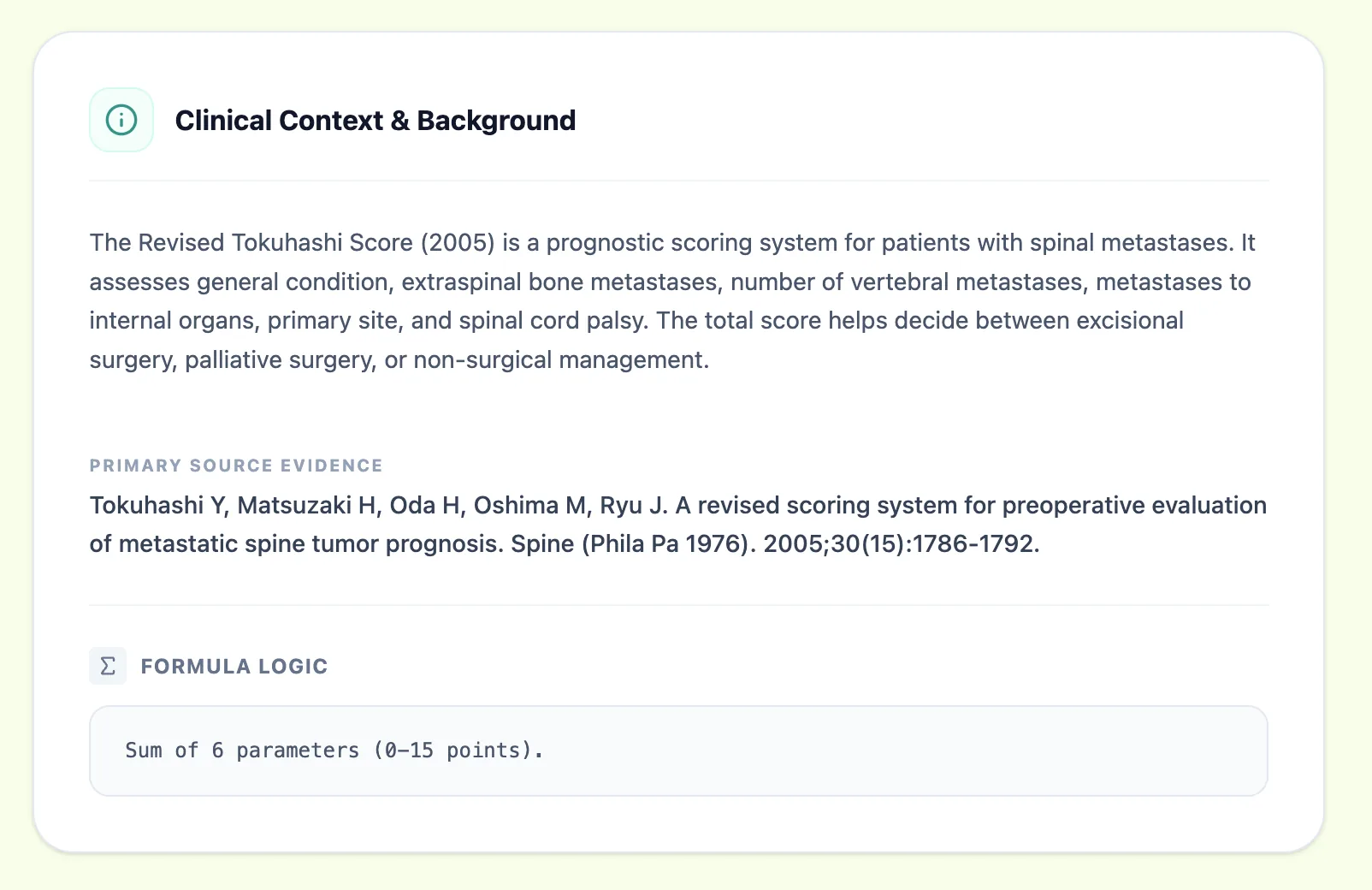
Figure 1. The clinical background panel summarizing the Revised Tokuhashi Score parameters.
3. The Importance of the Tokuhashi Score in Clinical Practice
Spinal metastases often present with mechanical instability, intractable pain, or evolving neurological compromise. The Tokuhashi Score provides a structured way to estimate survival and thus match the invasiveness of surgery to expected life span [2], [3]:
- Low scores (0–8):Suggest limited survival; conservative management or palliative surgery is favored.
- Intermediate (9–11):Patients likely to live >= 6 months; palliative surgery and/or radiotherapy are options.
- High scores (12–15):Predicted survival >= 1 year; extensive excisional surgery may be justified [1], [2].
4. Clinical Evidence and Validation
4.1 The Mathematical Model Behind the Score
The total score S is calculated as the sum of six parameter scores (pi), each ranging from 0 to 2:
S = Σ pi (from i=1 to 6) where 0 ≤ S ≤ 15
4.2 Original Development and Prognostic Groups
Tokuhashi and colleagues reported that survival differed significantly across three groups: 0–8 (short-term), 9–11 (midterm), and 12–15 (long-term) [3], [2], [1].
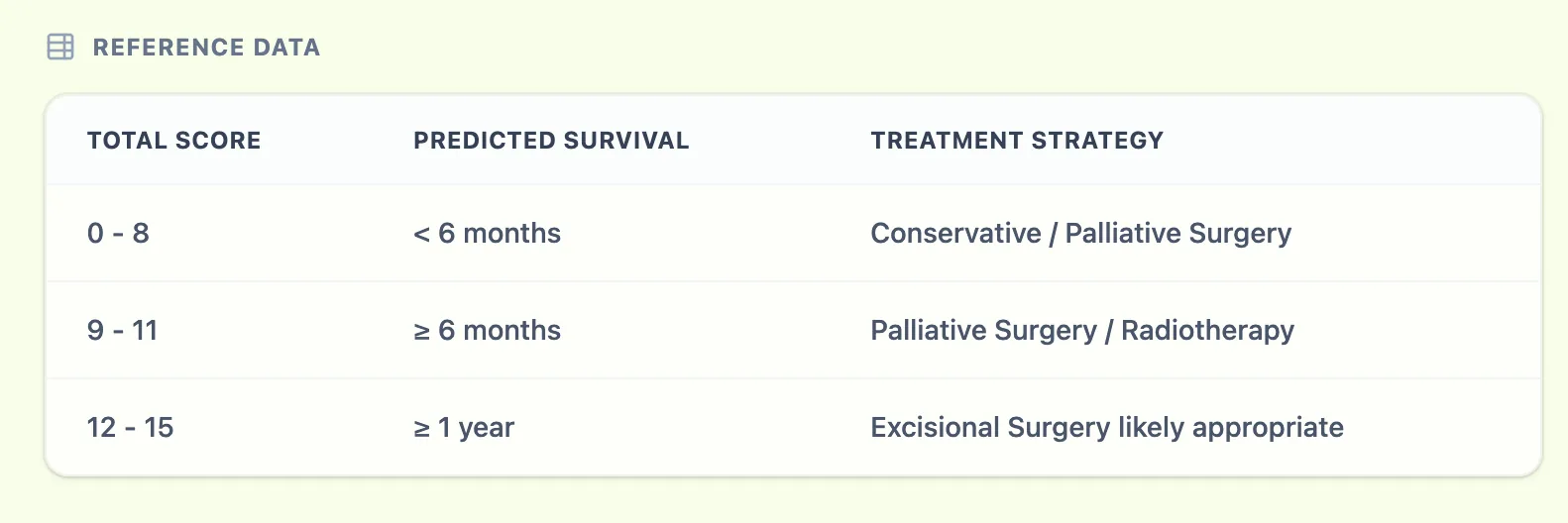
Figure 2. Reference table showing survival categories and typical treatment strategies.
4.3 Independent Validations and Limitations
Multiple external cohorts confirm that the score reliably separates patients with very poor prognosis from those expected to live a year or longer [8], [1]. However, predictive performance is modest in intermediate-score patients, and survival has improved over time with advances in systemic therapies [8].
5. How Our Tokuhashi Score Calculator Works
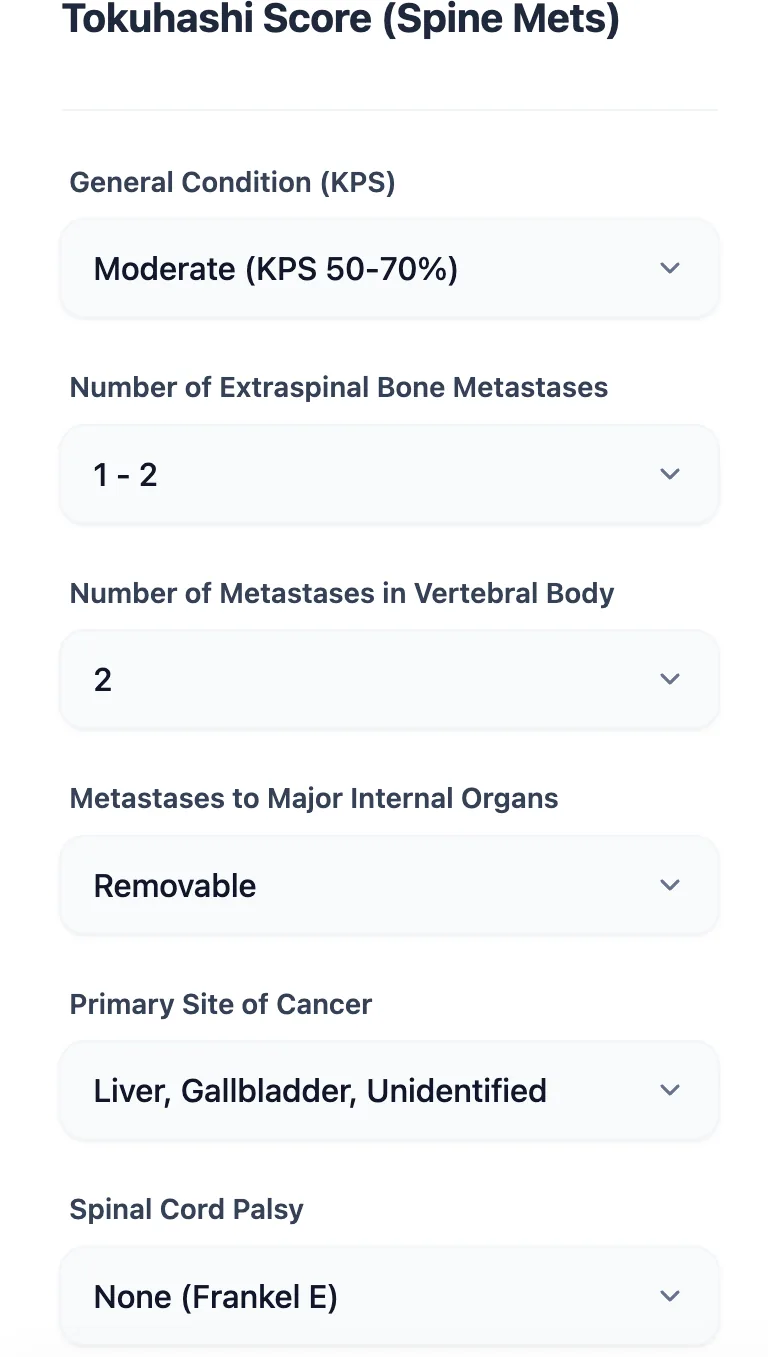
Figure 3. The input form guides users through each of the six Tokuhashi parameters.
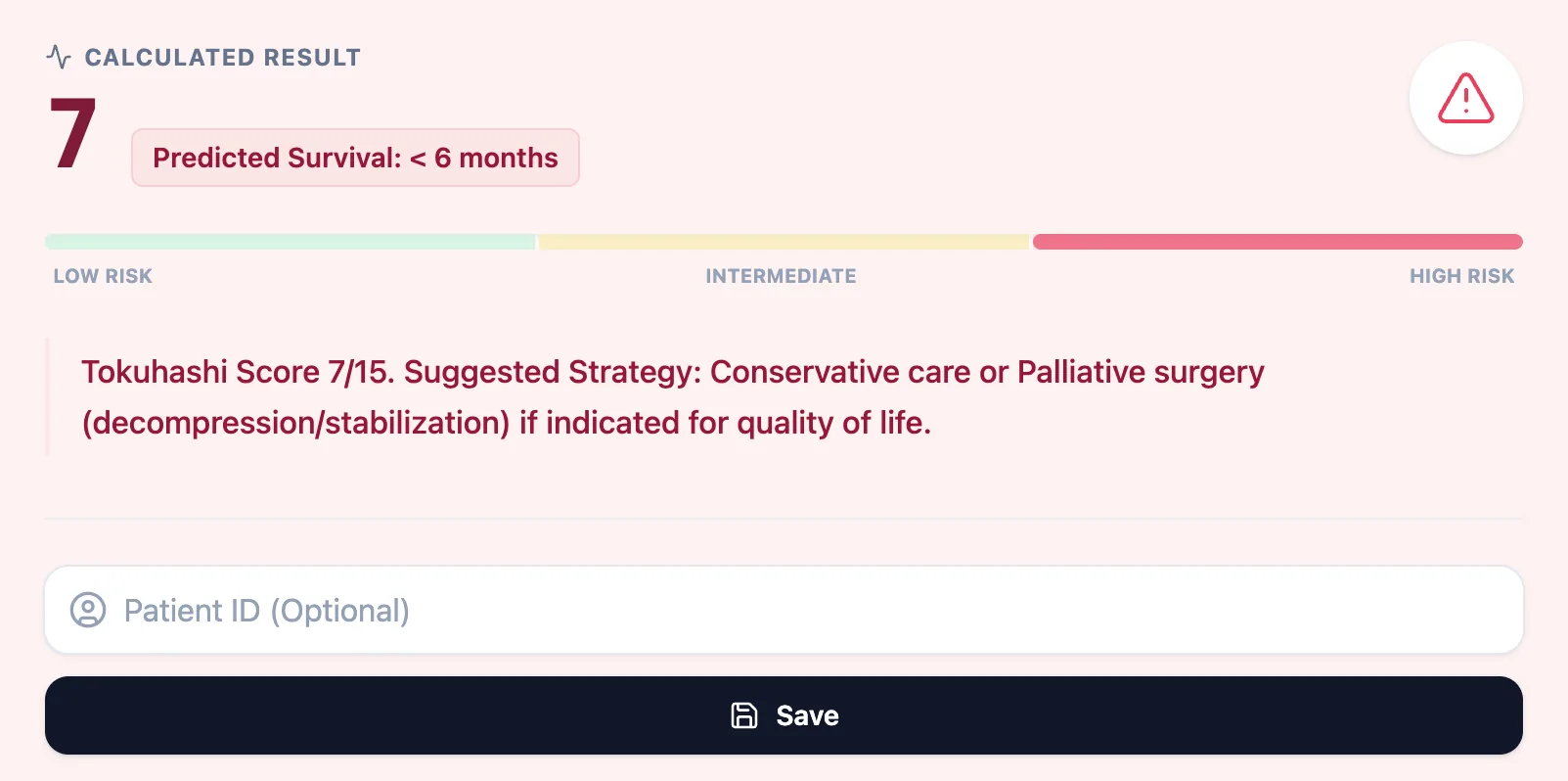
Figure 3. The input form guides users through each of the six Tokuhashi parameters.
5.1 Step-by-Step Scoring Workflow
Our interface is mobile-friendly and designed for rapid use during ward rounds:
- General condition (KPS): Select performance status (10% to 100%).
- Extraspinal bone metastases: Categorize as >2, 1–2, or 0.
- Vertebral body metastases: Record >2, 2, or ≤1 affected bodies.
- Internal organ metastases: Note if visceral metastases are non-removable, removable, or absent.
- Primary cancer site: Select from grouped primary categories.
- Spinal cord palsy: Input Frankel grade (A-E).
6. Using the Platform for Clinical Care, Teaching, and Research
At OncoToolkit, we see the Tokuhashi Score (Spine Mets) calculator as more than a one-off tool; it is part of a broader platform aimed at reducing cognitive load while preserving clinical judgment.
6.1 Routine Clinical Decision Support
In daily practice, the calculator supports:
- Preoperative planning: Quickly stratify patients to determine whether extensive reconstruction is justified.
- MDT preparation: Ensure a consistent survival estimate across oncology and radiation oncology teams.
- On-call decision making: Provide a structured framework for urgent communication regarding spinal cord compression.
6.2 Education and Simulation for Trainees
For residents and fellows, our calculator turns abstract scoring into a tangible teaching aid. Educators can demonstrate how shifts in KPS or visceral disease control move a patient from palliative to more aggressive surgical categories.
6.3 Clinical Research and Quality Improvement
When used systematically, the Tokuhashi Score becomes a standardized covariate for outcomes analysis. Teams can pair the calculator with case logging to track if actual survival aligns with prognostic predictions, helping refine local treatment algorithms.
7. Clinical FAQ
Yes, but survival might be more optimistic today than in the 2005 cohort. Clinicians should integrate up-to-date disease-specific data.
8. References
- 1. Zoccali et al. Prognostic Scores in Spinal Metastases. Source
- 2. Eap et al. Tokuhashi score: Is it still valid? Source
- 3. Tokuhashi et al. A revised scoring system for preoperative evaluation of metastatic spine tumors. Source
- 4. Frontiers in Surgery. Validation of prognostic scores. Source
- 5. Revised Tokuhashi Score Evaluation. Source
- 6. Spinal Oncology Assessment. Source
- 8. Validation of the Tokuhashi Score in Western populations. Source
Ready to Simplify Your Spinal Metastasis Prognosis?
Accurately estimate survival and guide surgical strategy using our interactive Tokuhashi Score calculator.
Use the Tokuhashi Score Calculator
Free to use. No registration required.